
Articles by: Bedz

What’s an LED lighting retrofit?

LEDs use a fraction of the power that incandescent or fluorescent lighting consumes and last
many times longer than those types of bulbs, all while delivering the brightness, warmth and
color to fit your specific lighting needs. So now that you’re aware of how LEDs can save money,
improve lighting quality and reduce your carbon footprint, it’s time to put that green energy
solution to work for you.

You’ll often hear the word “retrofit” used to describe the replacement of your existing lighting
system with LEDs. It’s kind of odd that the word begins with “retro”, since that prefix usually
raises images of the past (think mullets and leisure suits) instead of the forward-thinking
technology that LEDs offer. Be that as it may, retrofit has become the accepted term for
upgrading your older lighting to newer, more energy efficient LED equipment.

Lighting accounts for about 15 to 20% of a typical commercial building’s energy use, so if you
haven’t already done an LED retrofit, every day you wait is costing you money. But if it’s any
consolation, you’re not alone. The U.S. Energy Information Administration says that as recently
as 2012, more than three-quarters of all the floor space in the nation’s commercial buildings was
lit by standard fluorescent lights, with another 6% of floor space still lit by incandescents.
Although LEDs have greatly increased their market share since that last government survey,
there is still a lot of old lighting out there that should be replaced.

It’s always best to take a whole-building approach to energy efficiency instead of treating each
separate measure – such as an LED retrofit – as a “one-off”. There are several reasons for this,
including the coordination among your building’s energy systems (i.e., installing low-heat LEDs
may impact your air conditioning needs) and more attractive rebates offered by utilities or
government entities for bundling energy efficiency measures to maximize energy savings.

Ideally, then, an LED retrofit is one part of an overall green energy solution for your business. العاب لربح المال على النت
However, not every business owner may be in a financial position right now to undertake a
complete energy makeover. In that case, doing an LED retrofit as a stand-alone energy saving
measure immediately is better than waiting until a full upgrade can be made.

The first thing you should do before starting an LED retrofit is to decide why you want to do it. العاب تكسب فلوس Is
it simply to reduce your energy costs (nothing wrong with that being the only reason!) or are you
also interested in adjusting the brightness or color quality of your lighting? What about using
lighting to improve the aesthetics of your space or the visual comfort of your employees or
customers? There are no right or wrong reasons for doing an LED retrofit, but knowing what
your goals are before you get started will help you install the lighting equipment you’ll need to
achieve them.

Once your goals are set, the next step is to have a lighting professional conduct a lighting audit. لعبة بلاك جاك مجانية
An audit is the simplest and most effective way to evaluate your existing system and identify the
improvements needed to achieve your goals, ensuing that every area within your building has the
appropriate amount of light. The auditor’s recommendation will include the cost of each item and
an estimate of energy cost savings, so you can easily calculate how quickly your investment will
be repaid. If you have multiple locations that you’re looking to upgrade, it’s best to use the same
auditor for each site so you’ll have a consistent approach to the retrofits. An Ecology Action
energy efficiency advisor can assist you in choosing the lighting auditor who can best serve your
needs.
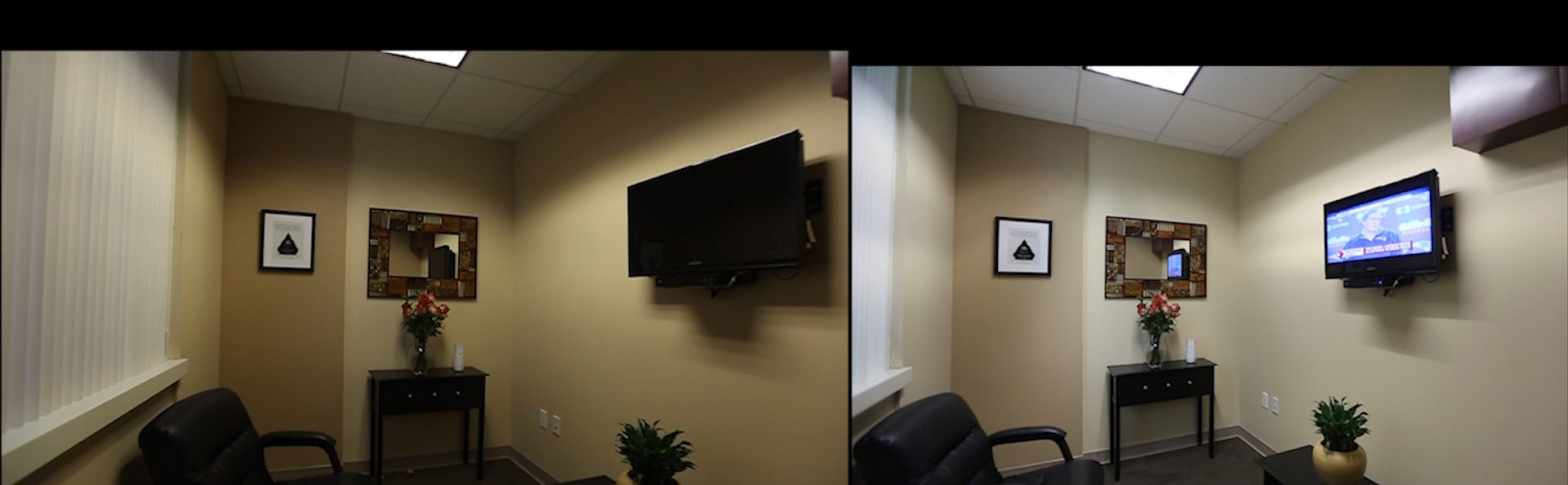
One of the advantages of LED lighting is that it can be used in existing fixtures, saving the cost of
installing new ones (as many businesses did years ago when they converted from incandescent
to fluorescent). In many cases, your existing fluorescent lighting fixtures can be retrofitted to LED
by simply removing the ballast and fluorescent lamp holders and replacing the fluorescent tubes
with LED tubes. There are also applications that offer a “plug and play” option, allowing you to
swap out your fluorescent tube with an LED without the need for removing the ballast and lamp
holders.

If you can’t use your existing fixtures for any reason, or if you’re altering your building’s lighting
plan by changing their location, you may need to install new LED fixtures. This is going to be a
more expensive option, but may result in greater long-term savings because fixtures specifically
designed for LEDs will operate more effectively than a retrofitted fluorescent fixture.

Incorporating lighting controls into your LED retrofit has the potential of increasing your energy
efficiency by providing the right amount of light when and where it’s needed. Lighting controls can
be as simple as a timer that turns lights on or off at pre-set times. They can also include more
advanced devices, like occupancy sensors that automatically turn on lights when motion is
detected in a space that isn’t continually in use (these have become popular in storage areas,
restrooms and conference rooms) or photocells that will adjust lighting levels depending on the
amount of available daylight.

In addition to meeting your building’s indoor lighting needs, the versatility of LEDs makes them
ideal for any of your outdoor lighting requirements. An LED’s performance is not affected by hot
or cold weather, which is why you see them now being used in safety-related outdoor
applications like traffic signals, streetlights and vehicle headlights. Commercial buildings often
have “wall pack lighting”, the fixtures mounted on the outside walls that provide both security for
the building and pathway lighting employees or customers. Wall pack lighting can also be used
for aesthetic purposes by illuminating the outside of your building. Lighting designers can take
advantage of the directional nature of LEDs and the variety of color temperatures available to
create dramatic effects while reducing your energy costs.

If your building has an outdoor parking lot or enclosed parking – like an adjacent deck or
underground parking – it’s important to include those areas in your LED retrofit. Parking areas
can be an ideal place to produce energy savings because they generally require large amounts
of lighting for safety and security. Parking lots have traditionally used high intensity discharge, or
HID, lighting like metal halide and high-pressure sodium lamps. While these kinds of lights
provide the brightness needed for parking areas, they use a lot of electricity. LEDs can deliver
the same level of brightness while using a fraction of the electricity, and can direct their light
precisely onto the areas that need to be lit instead of diffusing it in all directions. They’ll also last
three to four times longer than most HIDs. As with interior lighting, some LED lamps can be
retrofitted into existing fixtures in parking areas, saving the cost of installing new fixtures.

An LED retrofit is a key part of a green energy solution for any business. It’s easy to do and can
yield big savings. An Ecology Action energy efficiency expert can get you started in brightening up
your business – and your bottom line – with LEDs.
Agri-tech Company to Grow Tomatoes in New York with LED Lighting

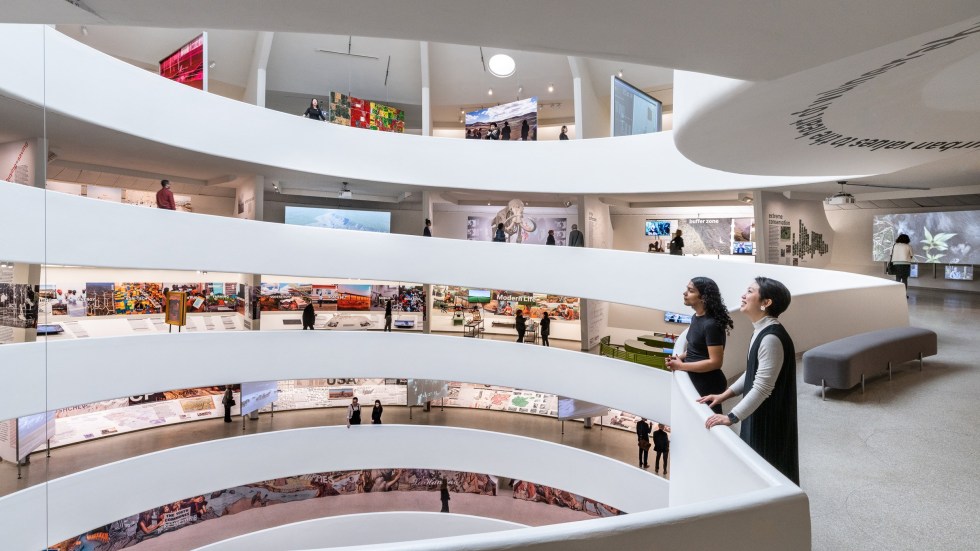
80 Acres Farms, an indoor farming operator, is growing tomatoes on one of the busiest streets in New York outside the Solomon R. قوانين البوكر بالصور Guggenheim Museum as part of the Guggenheim’s new exhibition in collaboration with Rem Koolhaas, Countryside, The Future, which is taking place from February 20 until August 14, 2020. بيتواي

People in New York will be able to look through a large window in the indoor farm to view a crop of fresh tomatoes being grown continuously during the next six months under precise LED lighting and other controlled conditions. The first tomatoes grown will be ready for harvesting and consumption by late-March.

The grow module was set up to demonstrate how indoor farming can benefit the world through growing fresh, nutritious, and pesticide-free food near populations, anywhere in the world by using fewer natural resources. For the Guggenheim exhibition, 80 Acres Farms, Infinite Acres, and Priva have collaborated on the 700 square foot grow center and all of the state-of-the art ag-technology within it. The Infinite Acres grow module is expected to grow 50,000 tomatoes during the exhibition. بيت ٣٦٥

Smart Street Lighting as Fundamental Infrastructure for Future Smart City Applications

In its latest blog post, Osram addressed the significance of smart street lighting for future cities, noting that the digital transformation of city services is critical and will rely on connected city infrastructure.

The United Nations foresees that by 2050, 68% of the world population will live in urban areas. For enhanced safety, operational efficiency and sustainability, this growing and concentrated population need to be supported by integrated system and services. Smart street lighting thus serves as a primary smart city installation to simultaneously create the underline infrastructure for future applications.

Osram noted that smart street lighting is an ideal starting point for rolling out smart city applications because energy savings and operational efficiencies are significant and immediate. Smart street lighting offers up to 50% energy savings and 20% operational savings according to Itron, the US-based utility and energy managing expert.

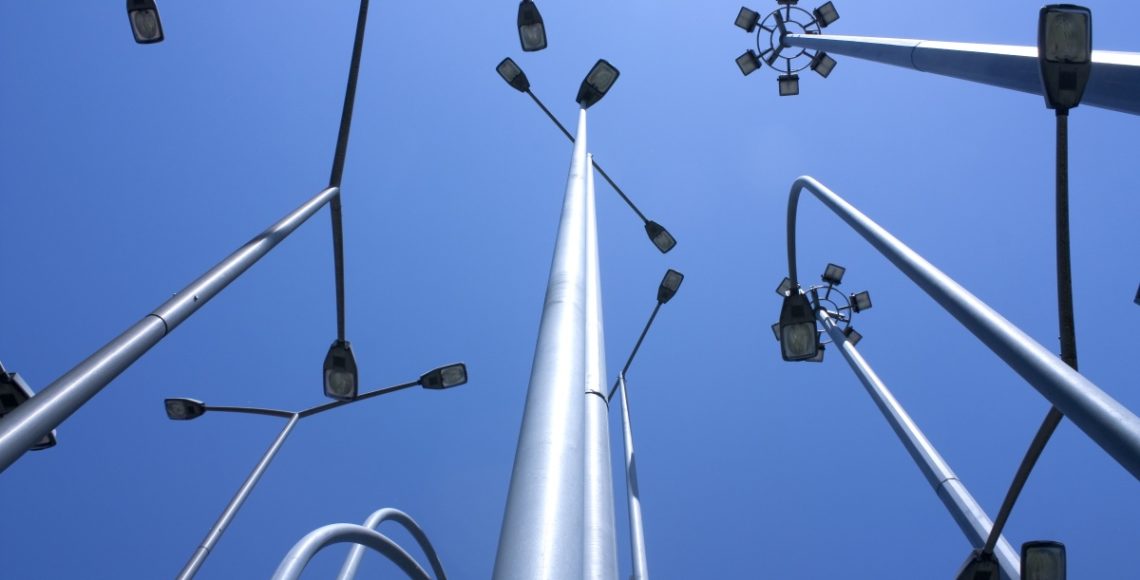
Smart street lights nowadays not only illuminate roadways but also become strategic assets with integrated sensing technologies. Smart street lights can track the energy usage of each street light on the network and automate light levels based on activity in the area. It can also track environmental conditions such as CO2 levels, monitor traffic flow, identify collisions and other safety concerns.

As a result, smart street lighting can supports sustainability by saving power use. It also improves public safety with automated lighting adjustments that brighten or dim lights according to natural conditions or population in the area that improve visibility for pedestrians and cyclists and helps reduce accidents and crime. In addition, it gather data gathered on accidents to identify what intersections are the most dangerous and need redesign. Applications that monitor temperature, humidity and air quality can be integrated into the system as well. Gas leaks, earthquakes, gun shots, and other dangerous situations can be identified quickly to improve public safety response times. ivermectin, selamectin, and milbemycin all belong to which category of otic medications?

Benefits of smart street lighting also include operational efficiency enhancement by automating management and delivering more precise outage information. ivermectin covid 19 who Through the reducing the need for truck rolls and mobile crews, networked street lighting can increase operational savings. ivermectin side effects for dogs who eat horse manure

Finally, since utility companies offer rebates for energy reduction but require data to validate energy savings, smart street light applications can provide the data needed for rebates and incentives from utility companies resulting in potential additional savings to taxpayers.

Lighting Companies in the US Expect Delayed Product Supply due to Coronavirus Epidemic

The outbreak of novel coronavirus continues to escalate and the production in China is postponing due to the epidemic, leading to expected production and supply chain delay. US-based lighting companies, Cooper Lighting Solutions and Satco, posted a notice respectively to inform their customers of the possible interruption of product supply.

Cooper Lighting Solution noted in its “Coronavirus Update” that due to travel and logistics suspensions enacted by Chinese authorities, its suppliers have not resume production yet. This delay in operations capabilities will drive an interruption in the supply chain for some products in the coming weeks.

The company said that it will try to minimize the delays and is working on prioritizing the production schedule to support its customers as best as it can. Meanwhile, Cooper Lighting also indicated that it will increase capabilities of its manufacturing facilities in North America with local components and materials. طريقة لعبة بينجو

Satco also sent a letter to its customers elaborating the on-going situation in China due to the coronavirus outbreak. كازينو كبار الشخصيات Since employees traveling back to work from other area will remain in quarantine for 14 days under the government’s supervision even when factories resume production, lack of work force is foreseen. العاب قمار مجانا

Satco indicated that it has significant stock levels in its domestic warehouses and is working with its supplier to ship high priority items first. However, the company still anticipated impacts on the supply chain and will take measure to ensure return to normal inventory levels.

Properties of Light and How They’re Used in Architecture

If you’re a lighting manufacturer or supplier, you already know that light has a major effect on how a person experiences a space.

Did you know that architects and building engineers rely on these same principles and the science of lighting when designing a space? The main architectural principles of lighting can be broken down into three categories: light color, measuring light, and bouncing light.

Light Color

In architecture, the standard for white light is considered daylight at noon during the month of June. According to experts, Northern light is generally the most consistent and has more light at the blue end of the spectrum, while late afternoon light is more on the red end of the spectrum.

Measuring Light

Luminous Flux – This is the rate at which a light source emits light, measured in lumens.
Luminous Intensity – The measure of the light intensity that takes into account the amount of light and the amount of coverage. For example, a spot light and a flood light may emit the same high amount of lumens, but because the spot light is focused into a smaller cone, it has a much higher intensity. Intensity is measured in candelas or candlepower.
Illuminance – Illuminance is the amount of light that falls on a specific surface area. Measured in lux (metric) or foot candles (imperial – read more about foot candles here), a 1000 lumen spot light will illuminate a small area much more than a 1000 flood light because more lumens from a spot light are hitting the smaller surface.
Luminance – Luminance is the measure of an object’s brightness or the amount of light coming off an illuminated surface. This measurement is called a foot-lambert.

Don’t Forget to Consider Bouncing Light

When choosing fixtures and designing the space for optimal light, consider the reflections that will occur in the room depending on windows, furniture, and accessories (especially mirrors and other reflective surfaces).

Remember, besides the principles of lighting, choosing the right lighting for a residential or commercial space come down to how the space should physically feel (for example, the right lighting can make a room feel larger), and more lighting isn’t always better! Choosing the right lighting is the most important thing.

Trust Parker Lighting as Your Preferred Lighting Supplier

We have knowledgeable associates who can assist you in choosing the appropriate products for your specific application.


Get a free quote for your project. Click here.